
On this page
Key takeaways
- SEO usually takes 3 to 6 months to show measurable results and 6 to 12 months to deliver steady leads.
- Competition, technical health, content volume, links and consistency decide where your site falls in that range.
- Impressions and keyword movement rise before clicks and leads, so report them from month one.
- Real curves vary: one BX ecommerce client went from 41 to 956 monthly clicks in four months, another grew 3 times in thirteen months.
Quick answer
SEO usually takes 3 to 6 months to show measurable results, such as more impressions and keywords moving up, and 6 to 12 months to deliver steady leads. Competition, site health, content volume and link building decide the pace, and low-competition local searches can move sooner.

SEO usually takes 3 to 6 months to show measurable results and 6 to 12 months to deliver steady leads, depending on how competitive your searches are, how healthy the site is and how much content and link building goes in. Some fixes, such as Google Business Profile updates, can move sooner. This guide shows what typically happens in each month of the first year, what speeds SEO up or slows it down, and a real ranking curve from our own client work.
How Long Does It Take for SEO to Work? A 12-Month Timeline
Understanding the SEO timeline helps you set realistic expectations and evaluate whether your agency is on track. Our monthly reporting guide shows which indicators to check at each stage.
| Timeframe | What's Happening | What You Should See |
|---|---|---|
| Months 1–2 | Audit, setup, technical fixes, indexing | No ranking changes yet: infrastructure work |
| Months 2–4 | Content published, backlinks starting, on-page optimized | Some keywords entering page 3–5, traffic slightly up |
| Months 4–6 | Google trust building, content indexed, local signals working | Target keywords reaching page 2–3, 20–50% traffic increase |
| Months 6–9 | Primary keywords approaching page 1, organic leads beginning | Page 1 rankings for lower-competition terms, real organic leads |
| Months 9–12 | Core keywords on page 1, compounding traffic | Significant traffic and lead growth, strong organic ROI |
| Year 2+ | Authority compound phase | 3–6x the traffic vs. Month 1, leads without increasing spend |
Factors That Speed Up or Slow Down SEO Results
Not every business gets the same SEO timeline. These factors significantly affect how quickly results appear.
- Domain age and authority: older domains with existing backlinks progress faster
- Website technical health: a technically clean site allows Google to crawl and index faster
- Competition level: ranking for 'restaurant Manila' is far harder than 'industrial supplier Malabon'
- Content investment: more high-quality content published = faster results
- Budget for link building: links from authoritative sites accelerate trust building. See what each budget level covers in our SEO pricing Philippines guide
- Consistency: campaigns that pause mid-execution lose their momentum and reset progress
| Factor | Speeds SEO up | Slows SEO down |
|---|---|---|
| Site age and links | Older domain with links from relevant sites | New domain with no links |
| Technical health | Fast, crawlable, indexable pages | Crawl blocks, duplicate pages, slow mobile pages |
| Competition | Niche or local searches | National searches in finance, legal, real estate or health |
| Content volume | Steady new pages that answer real searches | Few new pages, or thin pages written for keywords |
| Search intent match | Each page built for one clear search | Several pages competing for the same search |
| Consistency | Work every month without gaps | Stop-start campaigns and long pauses |
What Moves First in SEO
Some SEO improvements generate quick wins within weeks. These are worth prioritizing in the first 90 days.
- Fixing critical technical errors (broken pages, crawl blocks, duplicate content)
- Google Business Profile optimization: local ranking improvements within 2–4 weeks
- Optimizing existing pages with thin content: can move rankings quickly
- Adding missing meta titles and descriptions across the site
- Building citations in Philippine local directories for local SEO
How Long SEO Takes to Show Results: Real Ranking Curves
Timelines are easier to judge with real data. Two examples from our own work, both taken from the clients' Search Console data:
| Client | Period | Starting point | Result |
|---|---|---|---|
| Specialty ecommerce store, Philippines | May to Aug 2026 | 41 clicks a month, average position 12.2, 848 times shown | 956 clicks a month, average position 7.8, 11,800 times shown |
| Building materials supplier, Australia | Aug 2025 to Sep 2026 | About 10,000 times shown a month | 825 clicks a month in September 2026 (3 times the start), 44,205 times shown |
The ecommerce store moved fast because it already had products people searched for and mostly needed technical and on-page work. The building materials supplier climbed more steeply after its site redesign, which shows how much technical health and page quality shape the curve. Full details are in the specialty ecommerce case study and the building materials supplier case study. Results depend on the site, the market and the competition, and no one can guarantee rankings. A third example is a real SEO case study from Singapore and Malaysia, where 46 tracked service keywords ranked higher than in March and 19 reached number one.
What to Report in Months 1 to 3
Before leads arrive, progress shows up in leading indicators. Ask your agency to report these from the first month:
- Technical fixes completed and pages now indexed in Search Console
- Times shown in search (impressions) for target pages, which usually rise before clicks
- Keywords moving from beyond page 5 into pages 2 and 3
- New pages and articles published, and which searches each one targets
- Google Business Profile views, calls and direction requests for local businesses
- Links earned, and from which sites
If none of these move after three months of steady work, ask for a review of the keyword targets and the technical audit. Our guide to monthly digital marketing reports shows how these fit into a one-page report.
The Compounding ROI of SEO vs. Paid Ads
Paid ads generate traffic as long as you're spending. Stop spending: the traffic stops immediately. SEO is different: the content and backlinks you build this year continue generating traffic next year without additional spend. This is why long-term SEO investment delivers dramatically higher ROI than paid ads over a 2–3 year horizon. For real ranking curves, see our case studies, such as this building materials supplier in Australia.
The return depends on your margins, conversion rate and market, so judge it on leads and revenue from organic search in your own analytics and CRM rather than on a general multiple.
Search is also changing as AI answers appear in results. Our AI SEO guide covers how to stay visible in those answers, and our SEO services page shows how we run SEO programs.
Frequently asked questions
How long does it take for SEO to work?
Usually 3 to 6 months for measurable movement in impressions and rankings, and 6 to 12 months for steady leads from organic search. Low-competition local searches can move sooner; competitive national searches often take longer.
Has anything changed with how fast SEO works after the Google AI updates?
Yes. Content quality matters more than ever. Google's Helpful Content updates penalize thin, AI-generated content written for search engines rather than readers. High-quality, expert-authored content now outranks lower-quality content faster than in previous years.
Can I speed up SEO results by increasing budget?
Yes, to a degree. More budget means more content, more link building, and more technical work per month, all of which accelerate results. But there are diminishing returns, and no amount of budget overcomes Google's trust-building timeline entirely.
If I pause SEO, do my rankings drop immediately?
Not immediately: rankings built over months have inertia. But without ongoing content and link acquisition, competitors will eventually overtake you. Most businesses see ranking erosion within 3–6 months of stopping SEO work.
What is a realistic organic traffic goal for a Metro Manila service business after 12 months?
For a competitive service industry in Metro Manila, a realistic goal is 500–2,000 unique organic visitors per month at month 12, from a starting point of under 200. E-commerce and content-heavy sites can achieve significantly more with higher content investment.
Results from our client work
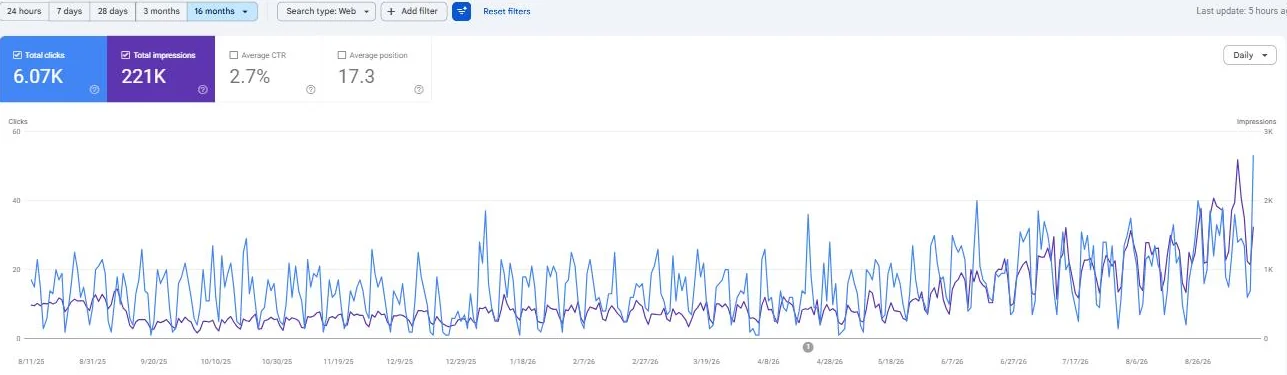
Monthly Google clicks up 3 times in thirteen months
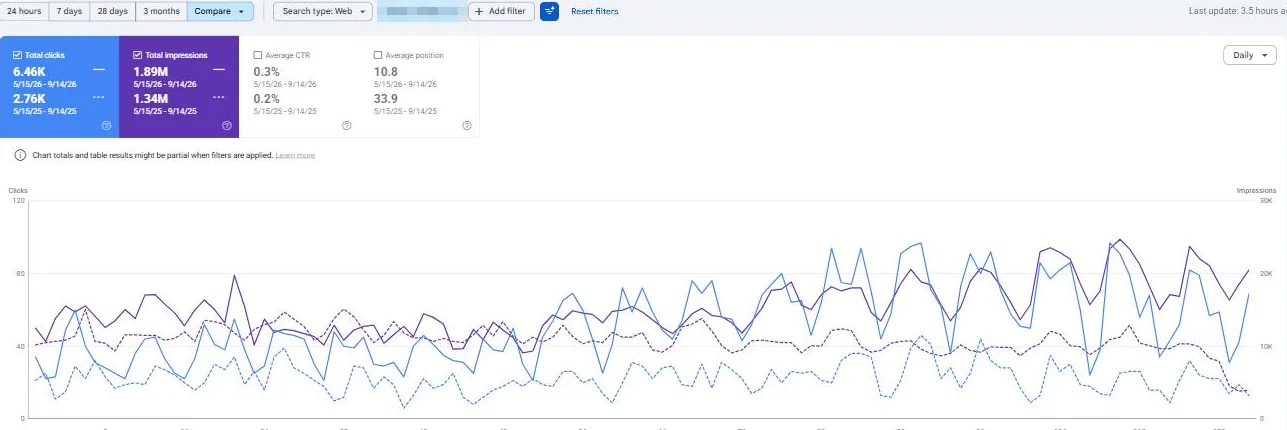
Double the Google clicks in every month of enrolment season
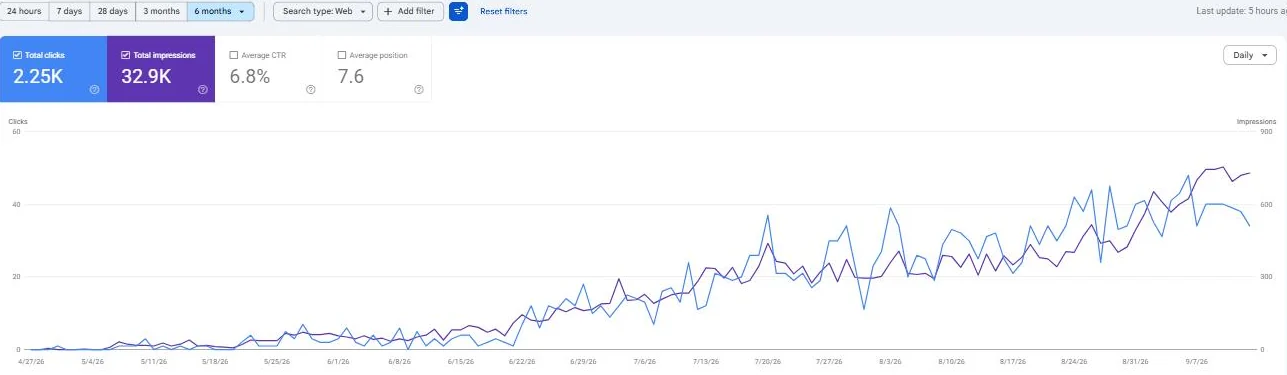
From 41 Google clicks a month to 956 in four months
How we wrote this guide
We reviewed the service scope and trade-offs from our hands-on work. Our guides explain costs, limitations, and what to ask before choosing a provider. See our process.
About the author
Tim Alcantara
Tim Alcantara is a Digital Marketing Consultant at BX Digital Marketing, a Taguig-based agency that runs SEO, Google Ads and Meta Ads for clients in the Philippines, Australia, the United States, Canada, the United Kingdom and Singapore.
Learn more about BX